Thursday, 8 November 2012

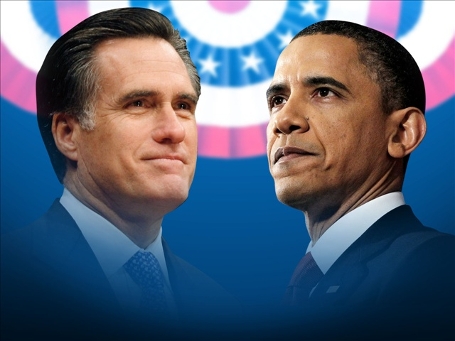
Obama 2012: the winners and the losers


Well, er, erm... I wasn't all that close, was I? But this blog's predictions weren't too far off either, and at least picked who the winner would 'probably' be. It wasn't a bad night for using the following idea as an organising concept:

If Democrats turn up at the polls, the President will be very, very narrowly re-elected. Many swing state polls are assuming electorates that look a bit like the Presidential election of 2008 - younger, less white and more female than others we've got used to. So if the electorate looks like the Republican wave year of 2010, Mr Romney will win quite easily.

But he didn't. Democrats did turn up. Hispanic, African-American and Asian Americans waited in line, many for hours, to ensure that the man they had voted for in 2008 wasn't turned out of office. So did young people and women - particularly single women. You know what? America used to look like an older white man - a father figure like Dan Rather or Walter Cronkite. Now it looks a lot more black, brown, young and female - and lot more liberal and even more left-wing, particularly in the Senate. All those commentators who said 'pah, young people are too busy boozing to turn up'? All those people who said 'minorities won't bother to vote'? All those senatorial candidates who thought that women shouldn't always be in charge of their own bodies? Well, they're the minority now.

You know who the real winners were in our neck of the commentators' and the pundits' woods? The counters. The cool, the calm and the collected. The statisticians. The social scientists. The modellers. The mathematicians. The reasoners. The truth-tellers. Take a bow, Nate Silver; Drew Linzer; Simon Jackman, the Huffpost Pollster's modeller. Take a bow, guys. You were right.

And the losers? Well, this column is not usually an emotional or even a warm-blooded one. It's dedicated to the same reasonable analysis that has carried the day. But forgive me if I shake free for a moment. The losers are the liars; the exaggerators; the crazies; the 'birthers'; the fabricators; the election buyers; the fantasists; the ranters and the ravers; the losers are, in a word, the haters (take a bow, Donald Trump). And the experts who refused to judge the numbers at face value - but saw instead what they wanted to see. Where is Dick Morris now? George Will? Karl Rove? Michael Barone? That 'expert' from unskewedpolls.com? Eating word pie, that's where.

We'll be talking about the future over the days to come - for Republicans; Democrats; and for the rest of us. Where are we going now? Well, and regular readers will know that I'm going to say this, great perils and dangers lie ahead.

But for now, I will leave you with words from President Obama's victory speech. It was a heady brew of that muscular American liberalism - with all its faults and flaws, its evasions and its limits -  that President Kennedy also represented. And it contained the following tribute to that much-maligned concept, the idea of hope itself:

I have never been more hopeful about America. And I ask you to sustain that hope. I’m not talking about blind optimism -- the kind of hope that just ignores the enormity of the tasks ahead or the roadblocks that stand in our path. I’m not talking about the wishful idealism that allows us to just sit on the sidelines or shirk from a fight. I have always believed that hope is that stubborn thing inside us that insists, despite all the evidence to the contrary, that something better awaits us, so long as we have the courage to keep reaching, to keep working, to keep fighting.

You know what? It's hard to summarise the United States of America more succinctly.

Monday, 5 November 2012

'Calling' the Presidential election


So after all the billions of dollars; all the debating; all the screaming and shouting and hating and fearing: it's nearly all over.

And it's time to make calls.Who's going to win?

Now, let me be absolutely clear: this column, were it to have a vote, would cast it enthusiastically for President Obama, a leader who has hauled the United States and the world back from the brink of an economic precipice. If you have a vote, and you're reading this in the United States, I would urge you in the strongest possible terms to go out and use it - and to back to incumbent.

But I think it'll be tight. Really, really tight. A squeaker. Choose whatever term you want - you get my drift.

Right now, President Obama has a 0.4 per cent lead in the Real Clear Politics average, a 1.2 per cent lead from the website Pollster, and a 0.7 per cent lead on the Talking Points Memo website. Those numbers are unlikely to change much as the last polls trickle in. How did Real Clear Politics do in 2004 and 2008? Well, they were 1.2 per cent adrift from the final gap in 2004, and they were 0.3 per cent 'wrong' in 2008. Pollster, by the way, was also 0.3 per cent off the final result in 2008. Really close; this time, that close to the gap between the candidates means that either could win the popular vote. Statistical guru Nate Silver gives the President an 86 per cent chance of winning that (statistician that I am at heart) I just can't square with this sort of uncertainty. Intrade punters, betting their own money, are saying 67 per cent right now, and somewhere between those figures might be about right.

It'll be so tight that Americans will be up all night - and possibly biting their nails for many days to come (or at least until Ohio counts its provisional ballots on November 17). And arguing about Republican governors' vote suppression in Florida and Ohio: in the latter state, its Secretary of State is trying to chance election rules at the last moment in order to make it harder to understand and comply with ID rules. There is some possibility of an electoral college draw - in which case Governor Romney will almost certainly be chosen to sit in the White House by a Republican House of Representatives - or yet another Supreme Court tie-breaker will be required.

You don't have to take my word for it - you can look at the early voting data, which shows President Obama narrowly ahead (insofar as one can tell) in Iowa and Coloroda - states he won at a canter last time. The early voting figures tell us exactly what the polls do: it's basically neck-and-neck at a national level, with perhaps some key swing states leaning over a little to Mr Obama. Fewer Democrats have voted early this year when compared to 2008 - though enough have turned up to give the President most of the swing states. If, that is, Democrats haven't been cannibalising their election-day turnout. Because if they have, they're toast.

And all this, of course, assumes that the polls are right. Now don't listen to any crazy talk here: their record is actually pretty good, on the whole, as the numbers above imply. There is a small, but non-negligible chance that they are wrong. 'Correcting for house effects', a process conducted by most aggregating websites, assumes that right in the middle of the polling range, there's a 'zero' target that's right. Take that assumption away, and anything could happen. British voters, of course, have their own memories of this: in the 1992 General Election, most polls predicted a hung or undecided Parliament in which Labour was the biggest party. The Conservatives won by eight (count them - eight) percentage points. Mr Romney could do really well with conservatives who don't like talking to pollsters, upsetting the odds: Mr Obama might bring tens of thousands of Spanish-speaking voters to the polls, or appeal particularly to young cellphone users who are hard to reach. Your guess is as good as mine on this one, readers.

In the end, it'll all come down to turnout. If Democrats turn up at the polls, the President will be very, very narrowly re-elected. Many swing state polls are assuming electorates that look a bit like the Presidential election of 2008 - younger, less white and more female than others we've got used to. So if the electorate looks like the Republican wave year of 2012, Mr Romney will win quite easily. There's plenty of evidence this year that Democrats are a bit disheartened by what they perceive as 'their' man's so-so performance in office. Republicans are passionate, fired-up, desperate to get rid of a man they perceive as a European-style socialist at best, and possibly a 'foreign-born' threat to national security at worst. You can see that from tonight's Gallup Poll, which has Mr Obama up three amongst all registered voters - but down one against likely voters. Balance that against the fact that the demographics are changing, and states such as Nevada, New Mexico, Colorado and even Arizona are inexorably moving away from the Republican Party as their electorates become more hispanic... And you have a story of anger and pride against the shifting tectonic plates of America's racial balance.

So the bottom line: expect Obama. But really, really don't be surprised if you get Romney, a candidate who gets top marks only for obfuscation and mendacity: but who might become the most powerful man in the world tomorrow night.

That is all. Enjoy!

Friday, 2 November 2012

Nate Silver and the war against statistical truth


Amongst all the noise generated by the US Presidential election (and we still don't know who's going to win) is a very, very worrying drumbeat that's pumping away just under the surface.

It's a war, waged by ultra-conservative commentators. And it's a fight against numbers - even (if you'll forgive the rather embarrasing show of emotion) against the truth.

Their nastiest bile - and some of it has been really nasty and disgusting stuff - is aimed at Nate Silver (above), hero of baseball and poker predictors everywhere, and the author of the New York Times' 538 blog. He's a man who's made his name applying statistical models of the data to predict outcomes - results that he's usually got right. Now he's being accused of arrogantly 'assuming' what will happen in the end, being privy to secret data from the Obama camp, weighting pollsters' results how he likes, and much else abusive and slanderous rubbish. It's all part of a wider picture, of course - that elements of conservative America are spinning off into their own 'post-truth' politics, in which they can question anything they like (so long as it's not their own preconceptions). A world in which they try to undermine voting machines' reputations before ballots can even be cast - though of course Democrats have long had their own conspiracy theories about the voting machines that were used in the 2004 elections.

This stuff matters. You have to understand numbers and concepts of scale to understand the world around you. Of course numbers are constructed, shifting, uncertain - as this column has argued and accepted on many occasions. But that doesn't mean that they're all as good as one another. Still less does it mean that you don't have to be able to put them in context, mobilising actual knowledge (the outbreak of italics is a metaphorical jab in the chest with a pointed finger, I know - but hey, I'm angry).

So, for instance... Republicans have been arguing that the fact that they're ahead in the polls with 'independent' voters, who aren't registered as Democrats or Republicans, means that they're going to do well next week. Which they might. But it doesn't necessarily mean this - because many conservatively-minded voters may now be listing themselves as 'Independents' as 'their' party zig-zags ever more crazily to the far right. Take another example. Republicans have been arguing that they are doing well in Ohio, based on the fact that early turnout in their countries has been very good. But get right down to the ward level, and things look rather different, with Democrats turning out well. It may well be that right-wing journalists have not dug deeply enough into the grainy mess of the raw numbers here.

And so on. And on.

There's one very telling set of details buried in all this - and it's that Silver uses the methods of social science, not the impressions of pundits or commentators. He is clear that he is not predicting that Obama will actually win: he's just saying that it's pretty likely, on the basis of the numbers that we now have, and compared to the alternative. And he's not saying that this won't be close. He's simply saying that, while close, the balance of evidence for predicting victory is (delicately but definitely) on one side and not the other. More moderate conservative voices accept all this, of course, while pointing out that their real problem is with the 'utopian' idea that models can predict the unfolding of the future.

That cod-philosophy to one side, it's important to note that Silver publishes his methods - as do other reputable number-crunchers trying to turn leads or deficits into predictions. He draws on accepted mathematical proofs. He's not alone, with other prediction sites and (something I put a lot of weight on) gambling markets also giving President Obama somewhere between a two-thirds and a 96 per cent chance of victory. He accepts that the eventual result on Tuesday night might be different from what his numbers suggest. They're suggesting a likelihood, and 80 per cent saying he'll win from a model doesn't mean he will. 20 per cent changes come off all the time (well, they come off a fifth of the time). He doesn't change his views (or his model) in mid-stream. He uses data - not the gut feelings that pull us all over the place all the time.

You know what? I prefer his approach to that of the people chucking abuse at him. Call me old-fashioned.

Thursday, 1 November 2012

The myth of 'Mittmentum'


The US Presidential campaign continues to amaze. It's a tie in the polls. Swing states seem to lean over towards the incumbent, but early voting makes things look very, very close indeed. Statistical modellers are pretty confident that Barack Obama will be re-elected, but remember that they're still only projecting that by a point of two. It's going to be close. There's no time for the two candidates' lines to diverge much anymore.

We'll be talking about these factors later in the week (including ever-more personal and disgraceful attacks on bloggers who dare to predict an Obama victory), and then trying to peer through the fog of data to 'call' the election (as Americans say) on Monday.

But for now electors should beware anything anyone says about polling. The fog of war has descended, and there will be no 'truths' uttered until Wednesday morning.

Take one example: the much-discussed phenomenon of 'Mittmentum', which is supposed to describe an ever-strengthening tide of support rolling in towards the Republican's election. Republican strategists are saying they're going to win; that the polls are moving in their direction; that they're going to 'expand the map', going into states that Obama won easily in 2008 - such as Pennsylvania or Michigan.

Except that it isn't true.

Take a look at the graph that I've drawn above (click on it for a better look). What do we see? Governor Romney shot up in the polls after his successful drubbing of the President in the first debate in Denver (by far the worst, most disastrous performance by an incumbent in the history of these debates). He really did have 'the big mo' in the first few days of October. That's for sure. But then his position stayed static, with perhaps a teeny, tiny drift towards him until the last week or two, during which the Democrats have begun to reverse the tide a little.

'Mittmentum'? Don't you believe it. It's a mix of a bluff and an inappropriate methaphor. What does 'momentum' mean, anyway? Dictionaries record that the word carriers with it the connotation of ever-building, irresistible, inevitable force. And in politics, nothing is inevitable.

And by the way: you shouldn't believe anything you read that comes from the ideologically-committed from now until you see actual hard data spewing from computers on Tuesday night.

Monday, 29 October 2012

How the Nazis united the world against them


I don't normally watch much television history - it's too much like a busman's holiday. Who really wants to watch car engineering programmes after working under one all day? That's how I feel a lot of the time.

But I did happen to catch BBC Two's Codebreakers last night - which was very good, give or take the usual dramatic and/ or doomladen music and graphics. 'Bletchley's Lost Heroes' turned out to be a poignant look at two experts whose role has often been rather obscured amidst a focus on the deconstruction of the Germans' Enigma naval codes, or the controversy generated over codebreaking hero Alan Turing's disgraceful post-war persecution. Bill Tutte, who first broke the Nazis' top-level Lorenz codes, and Tommy Flowers, who built the first electronic computer to systemise the process, probably shortened the war by a year or even two. Hitler himself used the Lorenz machine, known to the British as 'Tunny' - and which they managed to defeat without having even seen one. And yet neither man was ever really honoured for their key role in the winning of World War Two, for the secrets of Bletchley Park (above) stayed in the dark until they began to leak out into the public arena in the late 1970s and during the 1980s.

For me, it was yet another interesting proof of how the Nazis had united the world against themselves. From Norwegian schoolteachers refusing to co-operated with their occupiers, to Greek Communist and Yugoslav nationalist partisans, from American capitalists to Stalin, from Churchill to Cripps, what the German state did between 1933 and 1945 was systematically cut off every avenue of escape from its dilemma. Nineteenth century German nationalists would have said: don't annoy the British; don't build a fleet; don't fight on two fronts at once; anti-French and anti-Russian nationalisms are your friend. Each and every one of these traditional nostrums Hitler ripped up - giving the lie to A.J.P. Taylor's absurd-but-enlightening contention that the Nazis engaged in a 'traditional' German foreign policy.

And there is one further, and actually rather optimistic, irony. The Nazis thought that they were waging a war against 'weakness' - against the different; the non-conformists; the apparently 'useless'. But who defeated them, at Bletchley Park? Jews; gays, like Turing; working women, employed throughout the Park; oddballs; academic eccentrics.

The Nazis were defeated by the absurdity of their own ideas. Which, when you come to think of it, is a pretty encouraging thought.

Thursday, 25 October 2012

The UK's return to growth: two cheers?


So it's official. According to the Office for National Statistics (the ONS), the UK economy is growing again (above). And pretty quickly, too. This column has always predicted that the permafrost couldn't last forever - and so it has proved.

The UK has so many economic strengths - in high-quality engineering, in financial services, in travel and tourism, in education, and (as noted by the ONS today) in the creative industries - that it's been more of a surprise to see it so flat on its back for so long. Despite all its structural problems - particularly in housing, and in providing jobs for young people - you'd be hard pressed to hold this innovative and well-placed nation down for too long.

And there's so much slack to take up. Just so much. Take a look at the graph on the National Institute of Economic and Social Research's website. We're now four and a half years into the worst economic crisis of modern times, and we're still much poorer than we were in 2007-2008. In fact, the economy's smaller than it was even at the end of last year. It's always the same: just when we get the gloomiest, then the sun starts to peep through the clouds. Like in 1992-93. Or 1982-83. Or 1976-77. Once you really feel that you've hit bottom, then you can look upwards.

So slaps on the back and champagne all round, then? Well, not so fast. Growth had been held down in quarter two by bank holidays, bad weather and a royal wedding - and all the ticket sales for the Olympics have been added into quarter three. There's no way in the world that we're going to continue to grow at one per cent per quarter - which would amount to a stellar four per cent a year, of course. What with the Government still hell-bent on its (self-defeating) budgetary masochism, still miles from its absurd one-Parliament targets with almost all the cuts still to come, and with the Eurozone threatening to go into recession, there's a long and a rocky road ahead.

So all things being equal, we'll move ahead now, not so rapidly as we did over the last quarter, but slowly (if erratically) - though we'll be climbing out of a much bigger hold than we might have dug ourselves.

'All things being equal' is the key phrase: no Spanish banking failure, no American fiscal cliff, no deep Eurozone recession, and no insistence on ever-deeper budget cuts. That's a lot of 'ifs', I'm afraid.

This is a bit of a cliche, to be honest, but I'll try it: this is not the end. This is not even the beginning of the end. But it might just be the end of the beginning.

Tuesday, 23 October 2012

It's not time to call the presidential election... yet


So last night's US Presidential election debate (above) was a rather convincing, though not entirely crushing, victory for President Obama. That's three out of four in the instant polls for the Democrats, if you (firstly) ignore the one that really counted - the President's disaster in Denver - and (secondly) the testy and unsatisfying Vice-Presidential debate.

Actually, as with the second debate, there's quite a lot of evidence buried under the topline numbers (that the President came out on top - on style, substance, gravitas and just plain knowledge) that Governor Romney may have the last laugh. Independent voters, in particular, seemed to like his new 'I'm a man of peace' pledge - a sudden pivot just as unconving as all the others, at least amongst those who've been paying attention. And the President's aggressive testiness and mocking attacks may not be the best idea for a man elected on a pledge of bipartisan change - as I've been arguing all year. But still - there it is. That part of the strategy probably can't be changed now.

In fact, there is evidence of seepage among independent voters towards Governor Romney across the board at the moment. The challenger is now up among non-aligned voters in almost every poll - sometimes by very large margins. It's beginning to look like he might become President after all.

Except, except, except... Much of the data we have from the (murky and complicated) early voting ground war favours the Democrats - especially in Nevada, and to some extent in Ohio, two states that together would probably keep Mr Obama in the White House.

And we have ample evidence, from many, many elections, that that might mean very little in two weeks' time. There was the famous Dewey-Truman turnaround at the last moment, in 1948. No-one thought that Edward Heath could possibly beat UK Prime Minister Harold Wilson in 1970 - until he did, on a last-minute swing that almost everybody missed. Al Gore seemed to be miles behind heading into the final furlong of the 2000 Presidential election, only to catch up and pass his rival in terms of the popular vote. The UK Labour Party flirted with coming third in 2010, only to find a reservoir of strength from somewhere (I'm still not sure where) in the final days of the campaign. Even polls taken in the last few days of a campaign are not always that accurate, because they can't be as people make up their minds. Even the good ones have mixed records. In a tight race like this, where almost everything is within the margin of error, they can't be accurate enough to give you the winner. Especially in state-by-state and day-by-day samples.

So the Republican probably does have his nose a little bit out in front right now. It feels like we're getting near a tipping point. But anything could still happen. History says: don't bet against it.